How to Say No in Ministry Without the Guilt
Aug 04, 2026
If you lead anything in a church, you have a version of this moment. The text arrives at 9:40 on a Tuesday. A parent catches you after worship rehearsal. A board member "just needs ten minutes." And somewhere between the request and your answer, a voice shows up that sounds an awful lot like conviction: a real servant would say yes.
So you say yes. Again. The yes costs something. But the cost usually shows up later—at home.
Learning how to say no in ministry isn't a time-management problem. It's a discernment problem. Most ministry leaders don't need permission to say no. They need a way to tell which requests are actually theirs.
Why Saying No in Ministry Feels Like Disobedience
In most jobs, declining a request is ordinary. In ministry, it feels like unfaithfulness.
Why? Because the work has no natural boundaries. There's always another person to visit. Another volunteer to recruit. Another good thing you could be doing.And because it's God's work, every request can feel like God asking. That's the trap. You can't tell a genuine need from somebody's anxiety because both of them sound holy.
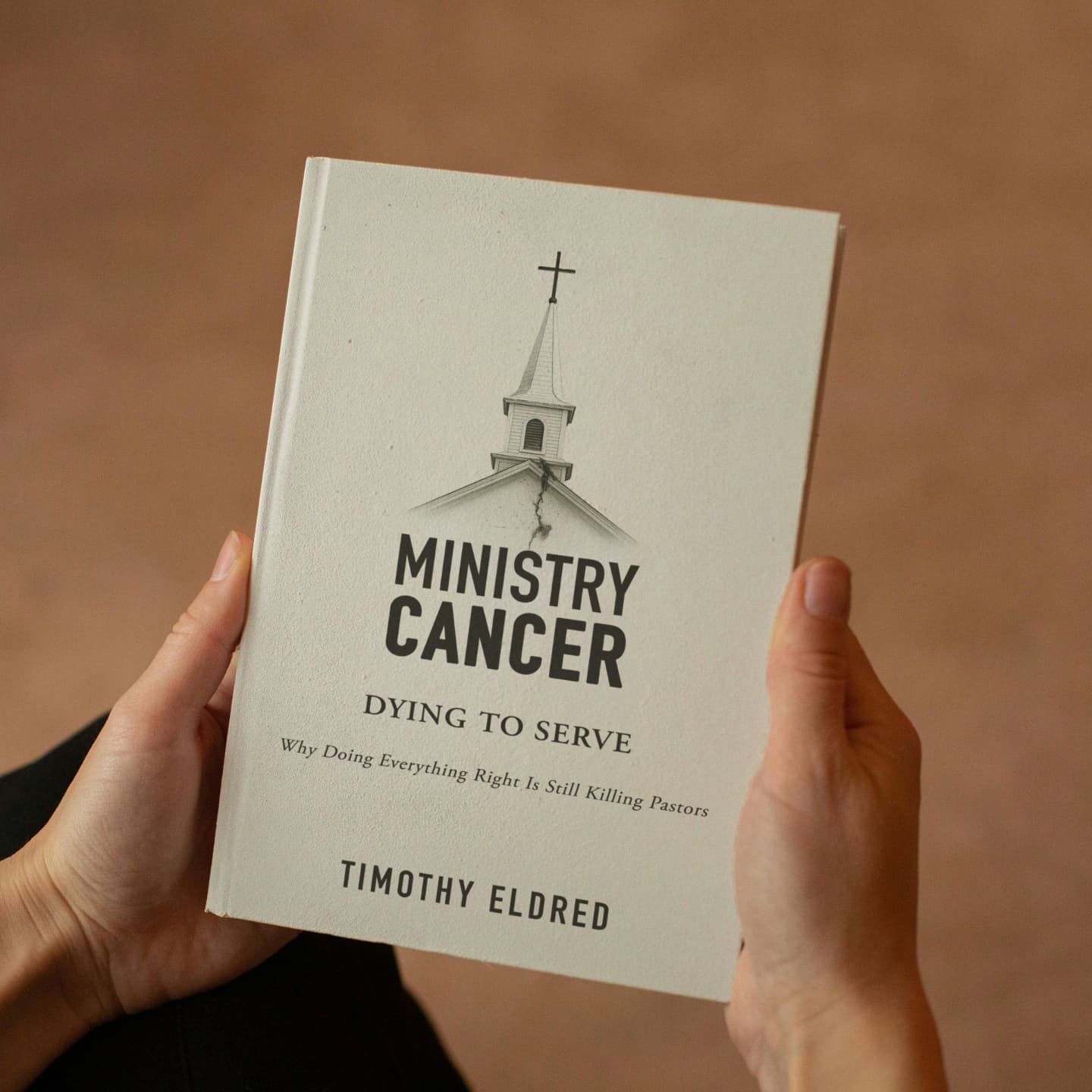
This is one of the five patterns I name in Ministry Cancer: Dying to Serve —the people-pleasing one where every request feels like God's voice, so you never learn to test any of them.
Nobody handed you a way to test them, either. The guilt isn't evidence you're saying no too often. Usually it's evidence you've never had a way to sort real from urgent, so every no feels like a 50/50 coin flip you might have gotten wrong.
The Difference Between Emergency and Urgency
Real emergencies definitely exist. But they're rarer than your phone or inbox suggests. And they're unmistakable once you know what you're looking at.
Not long ago my phone was off for the night. It usually is by nine. When I turned it on the next morning, there was one text that came in at 10:29. "Sorry for reaching out so late. Do you have a few minutes?"
I called him first thing. He was away with his family when he'd gotten the call that his sister had died. Overdose.
Everything I had planned for my morning stopped mattering.
Two things were true at once. That was a real emergency, and it deserved every hour it took. My phone had been off when it came in, and he was still there in the morning. The thing I'd have been most afraid of missing didn't break because I was unreachable for 12 hours.
Almost nothing else that arrives on your phone carries that weight. It just arrives in the same envelope, so it's hard to know what's inside.
Three Questions to Ask Before You Say Yes
Run any request through these filters before you answer.
- Is this a person, or a task? Real emergencies are somebody's life coming apart. A deadline is not an emergency, no matter how many exclamation points came with it. A children's ministry director once told me she'd spent years treating "we're short a nursery volunteer Sunday" and "my husband moved out" as the same category of urgent.
- Can it wait until morning? You can't show up for somebody's worst night the following Thursday. But the budget line, the bulletin, the difficult email, the schedule that needs rebuilding—all of it survives a night, and most of it survives a week.
- Am I the one, or just the easiest to ask? This is where most ministry leaders get caught. Being the most convenient person is not the same as being the necessary one. If you want to see where your week actually goes, the numbers are usually worse than anyone guesses.
What to Say When You Say No: Scripts That Hold Up
Most people fail at this not for lack of conviction but for lack of words. Here are ones that work.
- For the after-hours message that isn't an emergency: "Got your message. I'm with my family tonight. I'll call you in the morning." Send it, then actually call in the morning. The follow-through is what makes it land.
- For the role you're being asked to fill again: "I can't take that on. I'd rather help you find the person who can." Then help. Ten minutes spent finding someone beats six months of you doing it badly.
- For the meeting that doesn't need you: "I don't think I need to be in that one. Send me the decision, and I'll back you." A worship leader I know cut four hours a week doing only this.
- For the person who's going to be upset: "I understand that's disappointing, and I'm still going to say no." Don't over-explain. Explanation invites negotiation. The sentence is finished without a defense attached.
- For the genuinely good opportunity that isn't yours: "That's a good thing, and I'm not the one to do it."
One of my standard replies to non-emergencies is this: "I can give you five minutes now or 30 minutes on Thursday. What works best for you?" 9 times out of 10, the problem solves itself before Thursday ever rolls around. And people learn to rely on themselves and the Lord more than be dependent on me. That's much healthier pastoral leadership.
How to Say No When You're the Only One There
Most delegation advice assumes you have a staff. But roughly eight in ten ministry leaders serve churches under 200 people. Often bivocationally, and often with a team that consists of themselves and three volunteers.
If that's you, "am I the one?" sometimes has an honest answer of yes. There is nobody else. That's real, and three questions don't change it.
But go ahead and answer. But answer on purpose instead of on reflex. When you take the call because there's genuinely no one else, you're leading. When you take it because your phone buzzed, you're reacting.
And keep a running list of what you said yes to because you were alone. That list is your recruiting plan to equip others for ministry. And it may be the most useful document you write this year.
What Saying No Actually Protects
Not your calendar. The evening.
The people who live with you have been getting whatever's left after everyone else took theirs. That's the real cost. And it's the one nobody sends you a bill for. But it will compound with interest and come due eventually. And it's an expensive lesson to learn.
Your next twenty years of marriage, of parenting, of health, are just those evenings, a few thousand of them, one at a time. Nobody builds a twenty-year relationship in twenty years. You build it on a Tuesday night, and then another one.
The pattern behind the yes
If saying no feels like disobedience, that's not a personality trait. It's one of five patterns that get trained into ministry leaders—and the book that names them is free.
→ Get Ministry Cancer: Dying to Serve free
ABOUT THE AUTHOR
Tim Eldred has been serving in pastoral ministry for over three decades and has had the privilege of training and mentoring thousands of pastors in over 40 countries. He is the founder of The Authentic Pastor. Most importantly, he is a husband, father, and grandfather.