Pastor Time Management: Finding Your 20%
Jul 07, 2026
I'm writing this from Oregon. For the past few weeks, my office has been this porch with a view of mountains and my grandson. I did the same thing last summer. And I'll do it again next summer, too.
Here's the part that makes some ministry leaders uncomfortable and maybe even a little nervous: my team back home hasn't needed me at all. I've received no frantic calls. No pile of decisions waiting for my return. No projects are on hold. No W.W.T.D. (you can figure that one out yourself). The work only I can do still gets done when I'm away in a fraction of my normal hours. Everything else runs 100% without me. And it's all on purpose.
Now, I want to be clear about what this post is not. It's not a sabbatical story. I'm not on an extended vacation. And it's not a productivity experiment that caught me by surprise. It's a system I started building and using years ago. And every summer I go away for weeks at a time, this annual pilgrimage proves the experiment still works.
But before you write this off as something only a leader with a seasoned team could pull off, stay with me. The system has absolutely nothing to do with church size, staff size, or budget. And this year, the trip showed me something I didn't expect: a place where I'd quietly slipped past without seeing it.
How Leaders Learn to Prove Their Value
For years, I believed that being busy was how I proved my worth. It was validation that I was essential. It wasn't a conscious thought. But subconsciously, it was obvious. Especially if you watched how I worked and the hours I always spent being available. BTW: It happens to the best of us.
Nobody falls into that belief by accident. We were trained into it. Conditioned by culture. And yes, the church culture, too. The system that shaped most of us taught that presence equals faithfulness. That a full calendar is proof of devotion. That the leader who's everywhere, touching everything, is the one who loves the church most.
So what do we do? We fill our weeks. And the fullness makes us feel important. Maybe even holy. Whether you're a lead pastor, a worship director, or the children's leader carrying the whole ministry, the training was the same: do more, be more available, prove your devotion by your volume.
Here's what I know now and what I've built my life around. Being busy isn't how I prove my value. Doing the right things well—consistently—is the recipe I follow. When the majority of my time goes to caring deeply for people and empowering others—and I focus only on what I do best—everything else takes care of itself.
And that principle doesn't stop at ministry. It runs my marriage, my health, my family. One way of living. Everywhere. I don't have different rules for different roles. And neither should you.
The System Behind the Five Weeks
I can give the key to my success in one word: empowerment. Moses had to learn this. Exodus 18. He's personally judging every dispute in Israel, morning to evening, and his father-in-law steps in and names it. "What you are doing is not good. You will wear yourself out. The work is too heavy. You cannot handle it alone." (Not an exact quote, but you understand.)
Moses wasn't lazy. Moses wasn't unfaithful. Moses was doing good work that wasn't his to do, and it was wearing him out and stalling the people. At the same time. And notice the fix. Jethro didn't tell Moses to hire staff. He told him to raise up capable people from among the people.
I know what some of you are thinking right now. This is a big-church luxury. You serve a church of 120 with no staff. Or the whole youth ministry is you and two volunteers. There's nobody to hand anything to, right? (If that's you, welcome to the majority—you're not alone.)
But that's exactly the trap. In a smaller church, the 80% of your work that isn't truly yours doesn't get handed to an executive team. It gets given to your people. Or it gets eliminated. Some of it just needs to stop. And here's the harder truth: there are people in your pews who could carry real responsibility, and they never will as long as you keep carrying the church on your back.
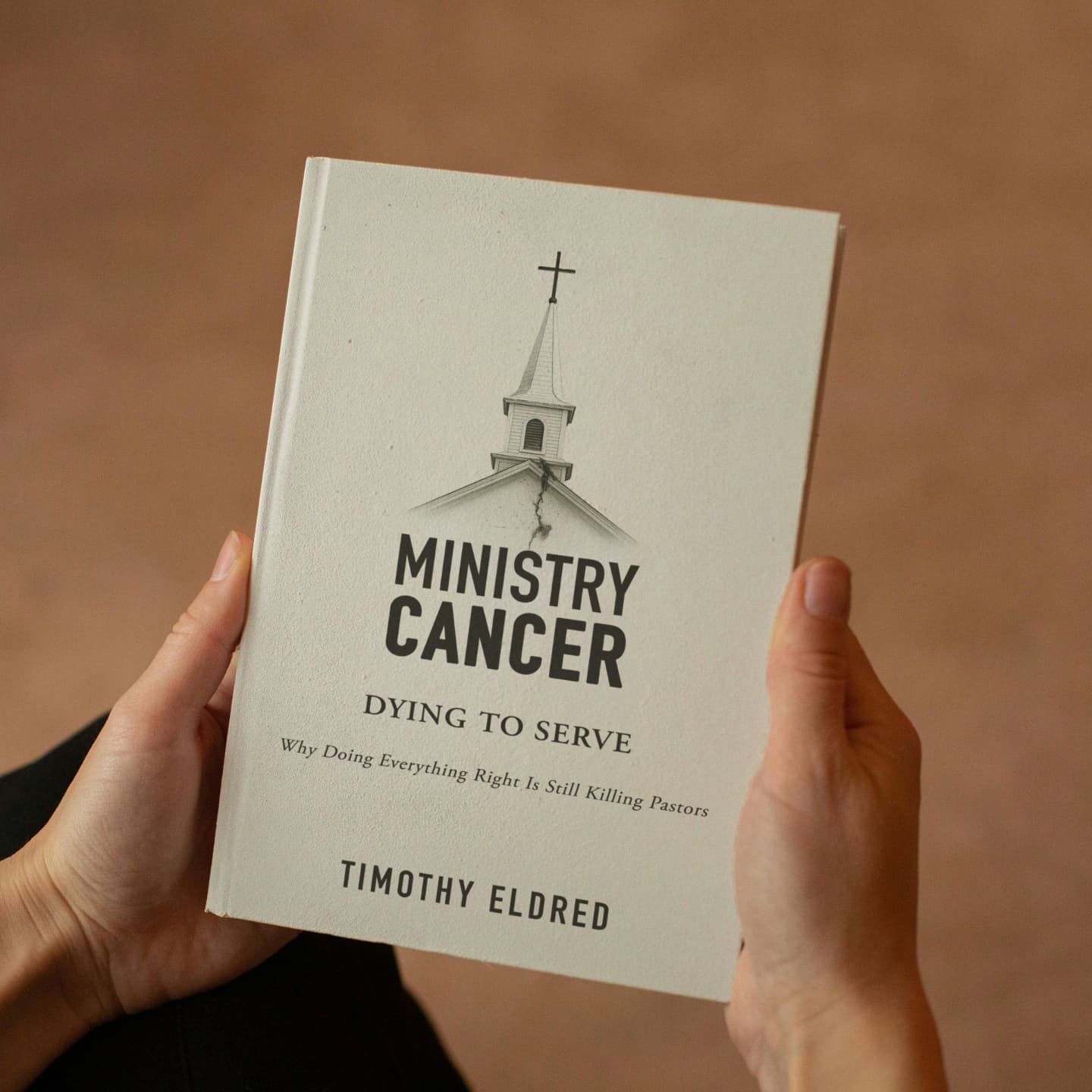
The pattern that keeps leaders from letting go is called the Control Complex. It's becoming the irreplaceable bottleneck through which everything flows. And it's not only common in ministry. It's at pandemic proportions. If you want to see if you're impacted, take this simple assessment. Then request your free copy of Ministry Cancer. I'd love to send you one.
How to Find Your Perfect 20 Percent
Here's how you find your version of it. It's the same audit I still run on myself. For one week (a month is better), write down everything you do. Every meeting, every conversation, every task. Don't change anything yet. Just keep the list. Then run every item through two questions.
- Would this still happen if I were gone for five weeks?
- Am I doing this because it's my calling, or because I don't know how to stop?
Here's what I know about me: The only things people around me can't do are those things I'm too lazy to train them for or too proud to let go of. That's as honest as I can be ith you.
Everything that would still happen without you, someone else can own. And everything you're doing out of capability instead of calling is a seat you're stealing from somebody God is trying to develop. (Read that again. And let it sink in, please.)
What's left is your real job. For most ministry leaders, the job description is smaller than you think. Caring deeply for people. Empowering others. Equip. The teaching, direction, and handful of relationships only you can carry. That remainder is where everything that actually grows a ministry lives. The rest is volume.
Why Ministry Leaders Drift Back Into Busy
Now the confession. I've been living this way for years. And this trip still caught me. Somewhere in the last year, some of the 80% crept back onto my plate. Quietly. Reasonably. And defensively. One "it's just easier if I do it" at a time. That's how it comes back. It never comes back as a decision. It comes back as a drift.
So when I get home, I won't be implementing this system. I'll be recommitting to it. I'll be cutting back what crept back in and handing back what I took back from others. Because intentionality isn't something you decide once. It's something you maintain.
What the System Actually Buys You
Here's what all of this is for. Not efficiency. Presence.
I've spent almost five weeks watching my grandson grow. These are days I will never get back. And because of decisions I made years ago, I don't have to miss them. So I'll leave you with two questions, and I want you to sit with them longer than feels comfortable.
- If you left for five weeks, what would still be standing?
- And who or what are you missing because you can't leave?
Whatever your honest answers are, they're not a reason to stay chained to your desk. They're your leadership development plan.
Where Does Your Week Actually Go?
Before you can eliminate the 80%, you need an honest picture of your health, your habits, and your patterns. The free Ministry Health Diagnostic takes ten minutes and tells the truth.
About the Author
Tim Eldred has been serving in pastoral ministry for over three decades and has had the privilege of training and mentoring thousands of pastors in over 40 countries. He is the founder of The Authentic Pastor. Most importantly, he is a husband, father, and grandfather.