The Race You Can't Win (And Don't Need To)
Nov 05, 2026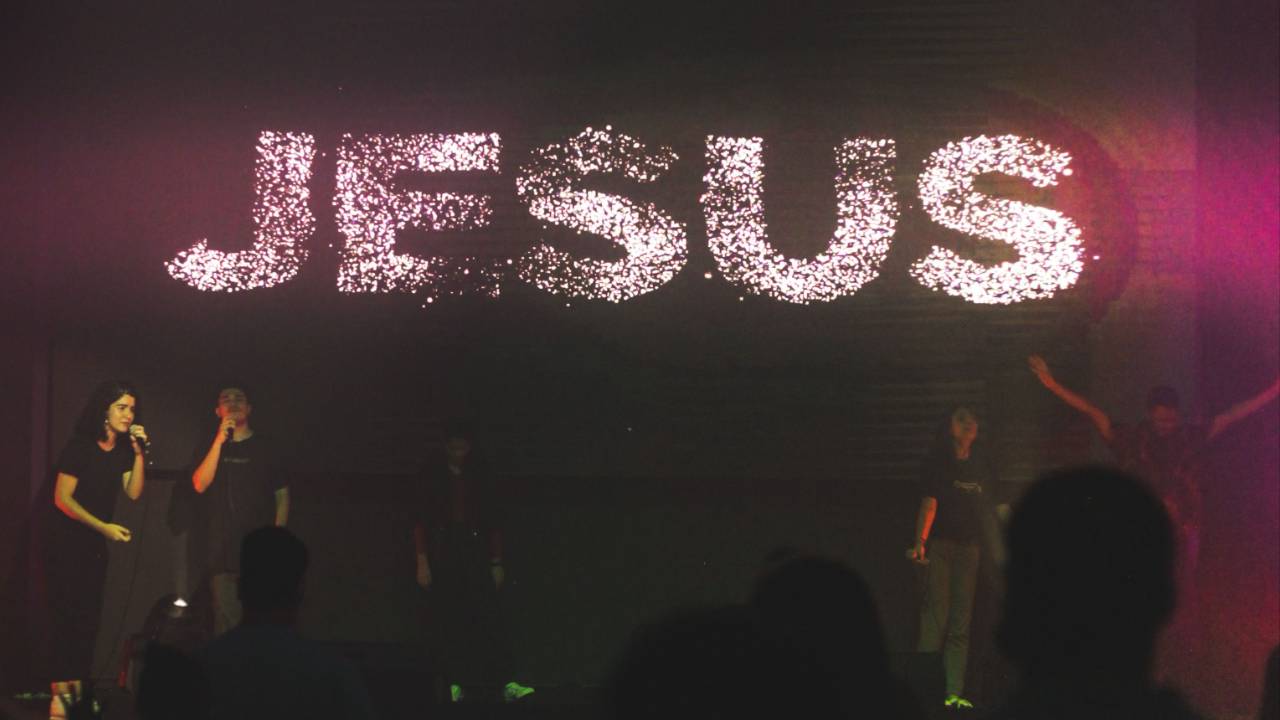
It's your Monday morning staff meeting. You're sitting down again to review Sunday. See if this situation feels familiar...
The lyrics were a beat behind on the second song. The handheld mic on the stage left side cut out during announcements. The kids' check-in line backed up into the lobby because one of your volunteers didn't show. Your worship leader is already making notes for next week. Your kids' director is texting replacements. You're already thinking about the sermon series that starts in two weeks and whether the graphics will be ready.
Then someone mentions that the church across town just installed a new LED wall. Nobody says anything, but everybody thinks it.
How in the world do we compete with that?
The Story We've All Been Told
Here's the story most of us learned, whether anybody actually spoke it out loud or not. Sunday is the front door. If the front door doesn’t wow the crowd, people won't come back. Excellence honors God. So you keep raising the bar on everything people see.
I want to be fair to that story because part of it is true. People do notice. When Pew Research asked Americans who had looked for a new church what mattered most, 83% said the quality of the preaching and 74% said the style of the services. Nobody comes back to something done badly, and they shouldn't have to. People deserve your best on Sunday.
But follow that story out to where it ends for a church your size.
Where the Production Race Ends
Maybe you have three or four paid staff and a handful of faithful volunteers. The church you're measuring yourself against has forty staff, a full-blown production team, and a budget you'll never see. And the church you're really competing with isn't even across town. It's on your people's phones. They can stream a flawless service from their kitchen with a cup of coffee, without ever getting out of their pajamas.
You will not win that race. And not because you aren't talented or committed. But because it's a race built for somebody else's resources—resources you just don’t have available.
So here's what happens instead. Your worship leader spends thirty hours a week getting ninety minutes right. Your kids' director spends her week filling slots instead of growing people. You spend Saturday night polishing a sermon so it can hold its own against the podcast your people listened to on the drive to church. And come Monday, you sit in staff meeting and talk about the mic that cut out…again.
Everybody's tired. Everybody's working hard. And nobody remembers the last time your staff meeting was about a person instead of the production. There's one more thing the production story never mentions. People who come for the show eventually leave for a better show. And there is always a better show.
I know the feeling. I’ve pastored the same rural church in one of the poorest places in Michigan for 30 years. People have to drive 30 minutes to shop at big-box stores. It’s our way of life. It’s the same city where the big churches exist. And eventually, the lure of the LED screen wins. I’ve seen it happen more times than I can count. So what do I do? I bless them as they go. And eventually, I watch them wander back when the show loses its luster.
What a Church Your Size Can Do
Look again at that Pew study. Right behind good preaching, 79% said feeling welcomed by the pastor and leaders mattered. That's nearly everybody.
That's a race you can win.
In a church your size, you can know almost everyone by name. You can notice when somebody's been gone three weeks and call them before they're gone for good. You can sit with a family in the hospital waiting room. Your worship leader can know the story of the woman in the third row who cries every time you sing Goodness of God. Your kids' director can know which parents are barely holding it together.
The megachurch wants that too. And the good ones work hard at it. But it's harder for them. It's built into your size.
And the culture is starving for it. In 2023, the U.S. Surgeon General called loneliness an epidemic and reported that about half of American adults say they've experienced it (Surgeon General's Advisory, 2023). People can stream a great sermon from anywhere. What they can't get on a screen is somebody who knows their name and notices when they're gone.
This Isn't an Argument Against Doing Sunday Well
Please hear me. I'm not telling you to stop caring about Sunday. Do it well. Do it honestly. Do it at the size you actually are instead of the size you wish you were. Excellence is the cover charge. It gets people through the door. But it's not the reason they stay, and it's not what changes them. So what if you stopped trying to win the race you can't win and started putting your best hours into the one you can?
Picture a year from now.
Sunday is still good. Maybe not flashy, but good and real. Your worship leader spent part of this year teaching a sixteen-year-old to lead, and last month that kid led a set while he stood in the back and cried a little. Your kids' director has twelve adults who know how to care for children, not twelve names on a schedule. Monday staff meeting still covers Sunday, but now it starts with people. Who's hurting. Who's missing. Who's ready for more.
And when somebody in town talks about your church, they don't talk about the fog machine. They say, "When my dad was in the hospital, the pastor came and sat with us. Twice."
That's a story no church down the road can out-produce.
Try This at Your Next Staff Meeting
Ask each person to estimate how many hours they spent on Sunday production last week. Planning, rehearsing, setting up, polishing. Then ask how many hours they spent with people who aren't on staff or in a setting that wasn't a meeting or a rehearsal.
Write both numbers on a whiteboard and leave them there. Don't fix anything yet. Just ask one question as a team. If we moved five hours a week from the first column to the second, what would our people notice a year from now?
If you look at those numbers and want an outside set of eyes on where your church's time and energy are really going, that's exactly what our church consulting does. The first conversation is free. Or download a sample report and see what one looks like before you spend a dollar. Fair warning, the church in it looks fine from the pews. That's the point.
———
About the Author
Tim Eldred has been serving in pastoral ministry for over three decades and has had the privilege of training and mentoring thousands of pastors in over 40 countries. He founded The Authentic Pastor. Most importantly, he is a husband, father, and grandfather.
About The Authentic Pastor
The Authentic Pastor is a comprehensive life and leadership development organization that helps pastors and churches achieve lasting growth through our proven WholeCare™ system, offering coaching, cohorts, and consulting services. We're passionate about supporting church leaders throughout their careers—from early challenges to long-term success—to create healthier pastors and more effective ministries.