What McIlroy Showed Pastors About Leadership
Apr 14, 2026
On Sunday, I turned my conference room into a Master's watch party. Five friends joined me. We had the food they actually serve at Augusta—the pimento cheese sandwiches, the egg salad, all of it. We had the drinks. Three TVs running. And the main screen was a ten-foot projection that made you feel like you were practically standing at the ropes.
It was a good day. And then we got to the 12th hole. Amen Corner. The most treacherous par-3 in major championship golf. The hole where careers have gone to die. And right as Rory McIlroy stepped to the tee—the power went out. Not just for us. For a large chunk of Michigan. Storms.
We sat there in the dark for a second, looking at each other. Then someone said, "I just got a notification. My just kicked on. Let's go to my place." So we packed everything up, drove five miles, and crowded into our friend's garage around a 32-inch TV to watch the final few holes of the Masters. And that's where we saw Rory McIlroy win his second straight green jacket.
What We Actually Watched
I've been thinking about that moment. Not the power outage. Not the scramble to the garage. But what happened on the 12th hole right before the lights went out and what that meant. Because what we witnessed Sunday afternoon wasn't just a golf tournament. It was an identity story playing out in real time. And if you're a ministry leader, I think you need to hear it.
Rory McIlroy is one of the greatest golfers who has ever lived. That's not hyperbole—it's just true. Six majors. Thirty PGA Tour wins. World number two. And for seventeen years, Augusta National owned him.
- 2011 — Led by four shots. Fell apart on the back nine
- 2018 — Final pairing with Patrick Reed, couldn't close.
- 2022 — Lost on the last day to world #1 Scottie Scheffler
Every time, the talent was there. The preparation was there. The world was watching. And every time, something seized up. Here's what nobody was really saying out loud: it wasn't his swing. It was identity. The Masters had stopped being a golf tournament for Rory a long time ago. It had become the answer to a question he couldn't stop asking himself.
Am I really as great as they say?
And every April, Augusta gave him the same answer.
Not yet.
What Changed
Last year, Rory finally won. A playoff against Justin Rose. The career Grand Slam complete. He fell to his knees on the 18th green and sobbed like a man who'd been carrying something heavy for a very long time. Because he had been.
Going into this year's Masters, someone asked him about the pressure of defending his title. And he said something quite profound worth pondering. He said winning last year allowed him to play more freely.
Watch what happened this week.
He built a six-shot lead after two rounds. Then nearly threw it all away in round three. Entered Sunday tied for the lead. In the final round, he fell three shots behind. The ghosts of 2011, 2018, and 2022 were right there at the edge of the frame. Then he walked to the 12th tee at Amen Corner—the exact hole where my projector went dark—and hit the best shot of his day.
He won by one.
The difference wasn't physical. It wasn't a swing adjustment or a new caddie or a better game plan. The difference was that for the first time in seventeen years, Rory McIlroy stepped onto Augusta National with nothing left to prove. His worth wasn't on the line anymore. And because it wasn't, he could finally play freely.
The Question You're Trying to Answering
I want to ask you something, and I want you to sit with it before you answer.
What question are you trying to answer every Sunday?
Because if your sermon is secretly a performance for your elder board—if your attendance numbers are really a verdict on whether you're cut out for this—if the church's growth is the thing standing between you and the ability to respect yourself in the mirror—then you already know how this ends.
It ends the same way every Augusta ended for Rory before last year. Talented. Prepared. And somehow, inexplicably, unable to close.
The Performance Prison doesn't care how gifted you are. It just does what it always does. It makes you risk-averse. It turns necessary confrontations into avoided conversations. It keeps you managing impressions instead of making disciples. It makes you preach to the approval of the room instead of the calling on your life.
You're not leading. You're performing. And somewhere underneath all that performance, a question is running on a loop that you've never fully answered.
Am I enough?
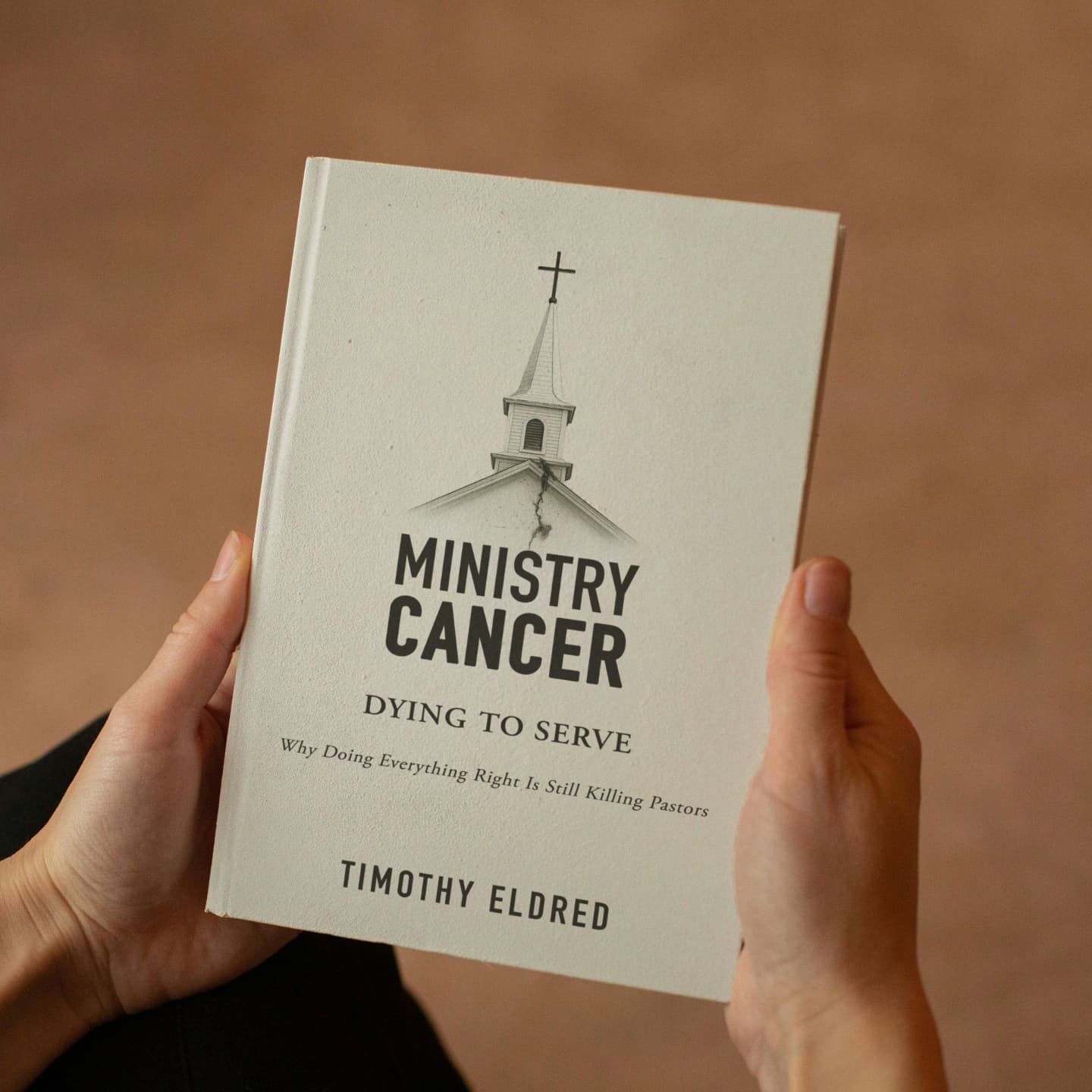
I wrote about this extensively in Ministry Cancer: Dying to Serve—the way the Performance Prison disguises itself as spiritual diligence, making it nearly impossible to diagnose from the inside. Because from the inside, it just looks like caring deeply about your church.
It's not. It's fear with better theology.
Leading Free Is Work
Here's what I want you to hear before you close this tab. Rory didn't arrive at freedom the moment he won last year. He arrived at freedom because he did the internal work—over years, through failure, through honest self-examination—that let him finally receive what the win actually meant.
That kind of work doesn't happen by accident. It doesn't happen because you preach more sermons about identity or spend more time in the Psalms. Those things matter. But they're not enough on their own.
The ministry leaders I've walked with who actually break free from the Performance Prison aren't the ones who got more successful. They're the ones who got more honest. About what's driving them. About what they're afraid of. About what they've been trying to prove—and to whom.
That's not easy work. But it's the only work that actually changes how you lead. Because a pastor who leads free doesn't need Sunday to tell him who he is.
And the congregation being led by someone like that? They can feel the difference.
Ready to Stop Leading Scared?
If you recognized yourself somewhere in this article, coaching might be the next right step. Not accountability. Not advice. The honest, direct, one-on-one work that actually breaks the Performance Prison—because it changes who you believe you are.
Not Sure Where to Start?
Take the free Ministry Health Diagnostic. Ten minutes. Brutal honesty. A real starting point.
About the Author
Tim Eldred has been serving in pastoral ministry for over three decades and has had the privilege of training and mentoring thousands of pastors in over 40 countries. He is the founder of The Authentic Pastor. Most importantly, he is a husband, father, and grandfather.