What Therapists Know About Burnout You Don't
Jun 02, 2026
I've been wanting to write on this particular topic for a while. So let me kick this article off today with a quote from the great "theologian" Dr. Phil: "You can't fix what you don't admit." Sounds simple enough, huh? Makes sense. So what is it so hard? How come it takes poking, prodding, or a crisis to confess something other people see so clearly?
If you typed "pastor burnout" into a search engine this week, you're not the first one. Heck, you're not even the hundredth. The same search runs through Google minute by minute by leaders who don't want to use the "B" word but can't shake the feeling that something is wrong with them.
Here's what I want you to hear right off the bat— burnout isn't a moral problem. It isn't a spiritual problem first. It's not a strength problem. It's a clinical pattern with measurable symptoms, predictable stages, and effective treatments.
And the people who understand it best aren't pastors. They're therapists.
What Burnout Actually Is (And Isn't)
Therapists work with burnout for a living. They see it in nurses, social workers, ER doctors, hospice chaplains, school counselors—and yes, pastors. They've watched the same pattern unfold thousands of times, and they've built a vocabulary for it most ministry leaders don't have.
Here's what they know.
- Burnout has a clinical definition. The most widely used framework, developed by Christina Maslach in the 1980s, names three components: emotional exhaustion, depersonalization, and a reduced sense of personal accomplishment. That's not a vague feeling. That's a measurable cluster of symptoms that can actually be diagnosed—if they aren't ignored.
- Burnout has stages. The early ones are reversible (pay attention to that sentence). The later ones aren't—at least not without significant intervention. Therapists track which stage someone is in because the right response is different at each one. A pastor in stage two doesn't need what a pastor in stage four needs. It's not a one-size-fits-all intervention.
- Burnout shows up in the body first. Sleep disruption. Weight changes. Blood pressure shifts. Gut problems. Persistent fatigue that a couple of days off doesn't touch. The body is usually the first to send the warning signal. Most ministry leaders ignore it because we've been trained to override the body for the sake of the call, which isn't biblical at all.
- Burnout doesn't mean you're weak. It means you've been carrying weight that exceeds your capacity for too long. Strong people burn out. Functional people burn out. Highly skilled people burn out. The strongest pastors we know are often the most at risk—because their ability to push through delays the warning signs others would have responded to months earlier.
Why Pastors Spiritualize Clinical Problems
Over my years of coaching pastors, here's where I see leaders get into real trouble.
Most of us were trained to read every problem through a spiritual lens. We're good at it. It's our job. So when we start showing signs of burnout, we frame them spiritually, too. We're not exhausted; we're "in a desert season." We're not depersonalized; we're "struggling with our calling." We're not depleted; we're "going through a dark night of the soul." All nonsense.
Sometimes—sometimes—those spiritual frames are accurate. But often, they're a way to avoid naming the clinical reality. Because the clinical reality is harder to fix with the tools pastors are taught, which tend to be barriers that only make matters worse. And the deeper we bury, the greater the pressure builds until it finds a way to eventually escape—or erupt.
There's a name for this behavior. Therapists call this "spiritual bypassing". Using spiritual language to bypass psychological work that has to happen. It's not a slam on faith. It's a clinical observation that when prayer becomes the only intervention for a multi-system problem, the problem doesn't go away. It just stops getting named.
And you may not like what I say next, but here's the blunt truth: burnout can't be prayed away.
I know that might bother some of you. It bothers me too. Because I've been there for hours, days, weeks, months on my knees wondering what was wrong with me. But it's true. Does prayer matter? Absolutely. Does Sabbath matter? 100%. Time with God matters more than almost anything we do. But when your nervous system has been dysregulated and your cortisol levels have been elevated for two years, prayer is one input among several you need. Treating it as the only input is exactly what therapists warn against. And exactly what most of us have been doing.
What Recovery Actually Requires
Therapists don't just name burnout. They treat it. And the treatment isn't more discipline.
It's rest. Real rest. The kind that goes deeper than a day or two off. And it's processing. Usually with someone trained to do it. It's the body work most pastors haven't been taught to take seriously: sleep, movement, food, the boring stuff. It's sometimes medication. It's often supervision or peer consultation—the equivalent of a coach who can see what you can't.
Therapists do this without shame. Because they've learned that taking care of the body and mind is part of the work, not a sign of failure. The best therapists I know have therapists. The best counselors have their own counselors. Nobody gets a pass. I'm a coach with a coach. A mentor with a mentor. And I wouldn't have it any other way. I'm not exempt.
Pastors are caring professionals in the same risk category as therapists, ER nurses, hospice workers, and trauma responders. The literature is clear: people in those professions burn out at high rates because the work is emotionally demanding by definition. You can't pastor well without being at risk. The risk comes with the role.
The difference is that therapists know how to address the risk. Most ministers don't.
I've spent decades watching leaders try to outwork, out-pray, and out-discipline a clinical problem. Some of them get away with it for a while. Most don't. And the ones who do are usually one hard board meeting or one bad season away from the collapse they thought they'd avoided.
What I've learned from the therapists is this: burnout responds to integration, not isolation. It responds when you treat the body, mind, and soul as a single system. Because that's what they are. You don't have to choose between a spiritual life and clinical understanding. The pastors we work with who recover from burnout do both. They keep their devotional practices. They also see therapists. They take Sabbath seriously. They also pay attention to sleep, exercise, and what their body is telling them. They pray for their people. They also ask someone to pray for them—by name, regularly, without making it look professional.
This is what therapists know that pastors don't. And it's not because pastors are missing intelligence or sincerity. It's because most of us were never taught to take the body, the brain, and the nervous system as seriously as we take the spirit. We can. And we should.
If something in this piece named what you've been feeling, pay attention. Your first move isn't a five-step plan. It's permission to say what's actually true. Because as I said in the first paragraph, "You can't fix what you don't admit." And if you need support, please reach out. Contact us here or use this number (989-214-3849). We're safe. And we care.
WANT A REAL STARTING POINT?
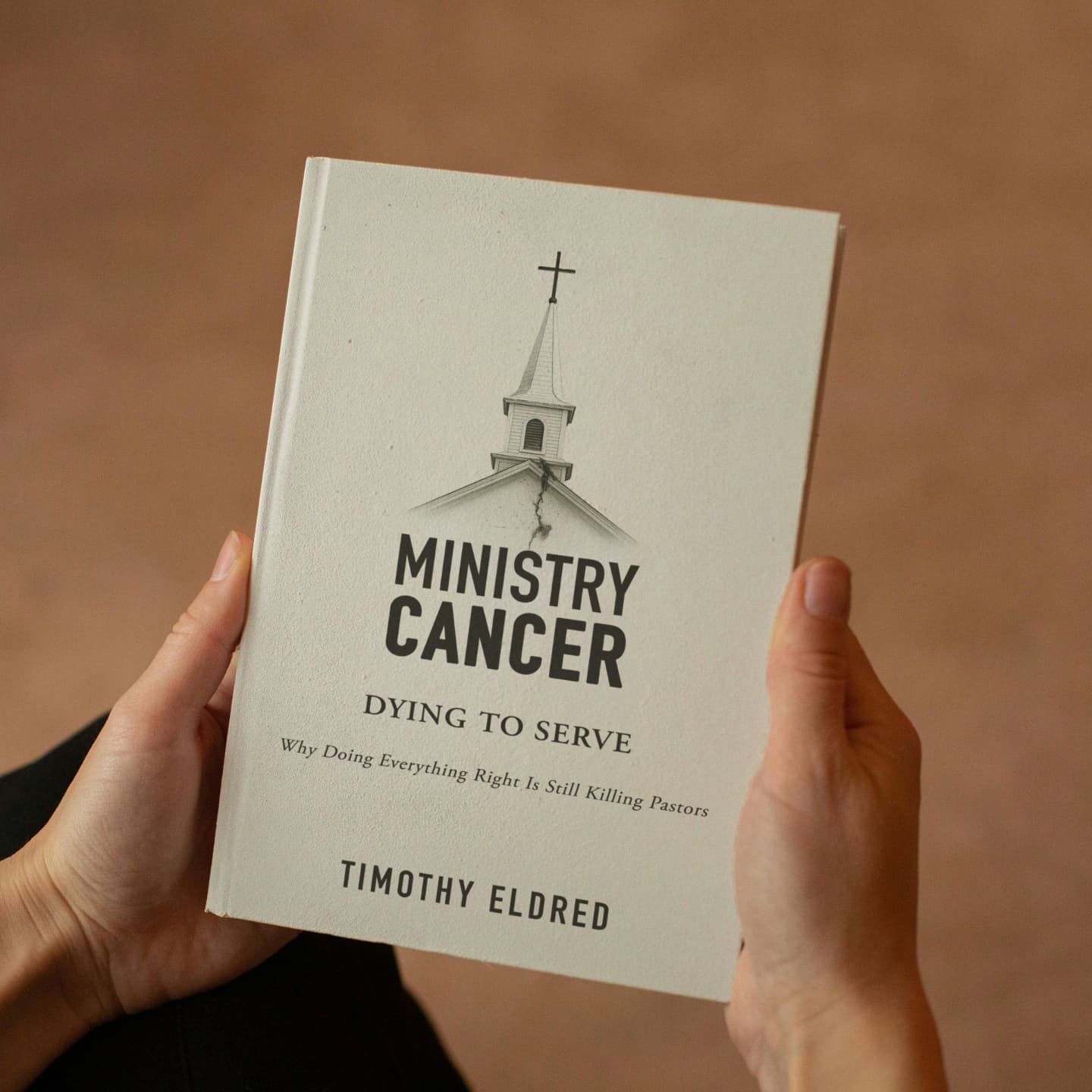
If you know you're ready for more, I urge you to consider getting coaching or joining a cohort. If you're not ready and prefer to read, you can get a FREE copy of my book, Ministry Cancer, or take a look at my newest book on body-first transformation called The Shift. Both will help you find a way to a healthier life and leadership.
ABOUT THE AUTHOR
Tim Eldred has been serving in pastoral ministry for over three decades and has had the privilege of training and mentoring thousands of pastors in over 40 countries. He is the founder of The Authentic Pastor. Most importantly, he is a husband, father, and grandfather.