What's Actually Keeping You Grounded?
Jul 01, 2026
Yesterday morning, I was scrolling through my phone and a name popped up. Brett. A pastor friend I hadn't talked to in a while. I made a mental note—I should give him a call today.
Five hours later, he beat me to it.
The text came in. A life update. He and the camp had come to a mutual parting of ways. It hadn't been working. He was on the hunt again. Then the last line of his text stopped me: "I found the letter you had me write to myself today and it kept saying 'no matter what.'"
I read it twice. Smiled. And called him.
He picked up like nothing was wrong. Not because nothing was wrong—the last few months had clearly been challenging—but because Brett has become one of the most grounded ministry leaders I know. So I asked him the question I've been asking a lot of leaders lately.
"Brett, what's actually keeping you grounded right now?"
I already suspected the answer. But I wanted to hear him say it.
"My mission statement."
Let me tell you something about Brett that might sound backward. He spent over twenty years as a lead pastor. He was good at it. Faithful. Fruitful. Then a few months ago, he made a decision that would look—from the outside—like a step down or a step out. He left the pulpit. Took a leadership role at a camp ministry. Sold his house. Bought a new one. Started a new chapter.
And in The Authentic Pastor world, I count Brett as one of the biggest success stories I've watched unfold. You might think that's strange. He left. He's not a lead pastor anymore. Doesn't that look like the opposite of success? Not to me. Not even close.
Because Brett didn't walk away from Jesus. He didn't abandon his calling. He didn't burn out and disappear. He did two cohorts with us over a couple of years, and somewhere in the middle of that work he began to dream again. Not because he was unfulfilled in the pulpit. He wasn't. His church was thriving. And so was he. He was just… unsettled. Aware there was more of him to offer than the role he was in was asking for.
The Brett who took the camp job was a different man than the one who started his first cohort. More confident. More clear. More willing to move when it was time to move. Night and day. And now the camp job is over. A proper severance. Back on the hunt. And Brett is—fine.
Because Brett knows the difference between his job and his mission. Most ministry leaders don't.
The Ten-Year Question I Wish Somebody Had Asked Me
I want you to think about something with me. Ten years from now—where will you be?
Some of you will be five years into retirement. Some of you will be in your tenth year of ministry, just getting started. Some of you will still be in the exact role you're in right now, because you thrive there and you feel led to stay. Some of you will have moved through two or three different roles by then—different churches, different orgs, different assignments.
Some of you will be in what people around you might not even call "ministry." A business you built. A nonprofit that isn't Christian-branded. A caregiver role. A season of raising kids or helping aging parents. Something nobody would put on the "kingdom impact" flyer.
Here's what I want you to hear: all of it counts. Ministry is not what happens inside a building with "Church" on the sign or a 501(c)(3) with the right theological statement. Ministry is who you are as you follow Jesus into whatever assignment He's given you. But we've been conditioned—there's that word again, the one I used in my last article—to believe it only counts if it looks a certain way.
That conditioning is going to cost some of you dearly in the next ten years. Because here's what I hear almost every week from ministry leaders I've been working with for a long time:
"I wish somebody had told me ten years ago…"
I've said it about my own life. Cindy tried to tell me. Mentors tried to tell me. I wasn't listening. I'd become successful enough in ministry that I was blind to how much better it could have been. That's a hard thing to admit. Success can be the enemy of the better life God still wants to give you.
The question isn't whether you'll be able to look back in ten years and see something you wish you'd done differently. Almost all of us will. The question is whether the gap between where you are and where you wish you'd gone is small—or catastrophic.
That gap gets set today. Not ten years from now. Today.
What a Real Mission Statement Actually Sounds Like
Here's the thing most ministry leaders miss. You probably have a church mission statement. You've probably preached on it. You may have led your board through drafting one. You know how to write mission statements for organizations. But do you have one for your life?
Not for your ministry role. Not for the position you currently hold. For you. The whole you. Husband or wife. Parent. Son or daughter. Friend. Leader. Human being. The version of you that exists whether or not you're standing behind a pulpit or have a position with the title pastor attached.
Almost no ministry leader I meet has one. And that's the whole problem. Here's what I hear when I ask ministry leaders about their mission. "My mission is to reach the world for Jesus."
That's nice. But it's not a mission. And frankly—it's not your job either. That's Jesus's job. Yours is to be a faithful steward of the specific life He gave you, in every role you play, for the years you have. And if reaching the world for Jesus is your whole answer, you're going to miss your purpose beyond your position.
Purpose beyond your position. Read that again.
Because when your assignment disappears—through retirement, through a mutual parting of ways, through a health crisis, through a season you didn't choose—the leader without a real mission statement doesn't know who they are anymore. Their identity was fused to their role. Take the role, take the identity.
Brett doesn't have that problem. Here's his mission statement. He wrote it, sat with it, tested it against real life, and now it holds him when everything else moves:
"To delight in being a child of God by living humbly, leading authentically, loving unconditionally, and learning continually, directing others to the truth of who God is and what He's done."
Read that again. Notice what it does NOT say.
It doesn't mention being a lead pastor. It doesn't mention any specific role. It doesn't mention a church, a title, or an org chart. It works whether Brett is behind a pulpit, running a camp, unemployed, on vacation, or driving his kids to school. Every role he'll ever play in the rest of his life fits inside that sentence.
That's what a real personal mission statement does. It works no matter what.
Which—I now realize—is exactly what Brett meant when he told me the letter he'd written to himself kept saying "no matter what."
What You Do With This
Most ministry leaders won't do the work of writing one. Because it's hard. Because it requires you to look at every part of your life, not just the ministry part. Because it forces you to name what you actually value, not just what sounds spiritual. Because it demands a level of honesty about the roles you play—as a spouse, as a parent, as a person with a body and a marriage and a set of finances and a limited number of years—that most of us have been avoiding.
But it's the single most important piece of work you can do this year. And in ten years, when your circumstances have shifted in ways you can't predict right now, it will be the thing that keeps you standing.
I'll be honest with you. This is the work that our cohorts do—not as a curriculum item, not as a five-step exercise, but as the underlying transformation. Brett didn't leave his first cohort with a mission statement in hand. He left with the beginnings of the awareness that he needed one. And by the end of his second cohort, he'd done the harder work—sitting with it, testing it, letting it change how he made decisions. That's the difference between a slogan and a mission.
I'm not writing this to sell you a cohort. I'm writing this because I want you to be Brett in ten years. Whatever your circumstances have done to you by then—grounded. Clear. Sure of who you are and Whose you are. Able to receive a hard text like the one I got yesterday and answer it with peace.
So here's the question—the only one that matters today:
Ten years from now, when the role you have right now looks completely different than it does today, what will be keeping you grounded? If you can't answer that, the work starts now. Not by accident. On purpose.
Because faithfulness to Jesus is real. But it's not a substitute for doing the actual work of naming who God made you to be—in every role you play, not just the one you get paid for.
You won't trip into that life. You'll build it. Or you'll spend the next ten years wishing you had.
READY TO WRITE YOURS?
Brett's mission statement didn't come from a worksheet. It came from a year of hard, honest work in one of our cohorts—eight to twelve ministry leaders, monthly group sessions, monthly one-on-one coaching, two working retreats. Not a program. A room where the real work of naming your life actually happens. If you're ready to be Brett in ten years, that room is where you start.
ABOUT THE AUTHOR
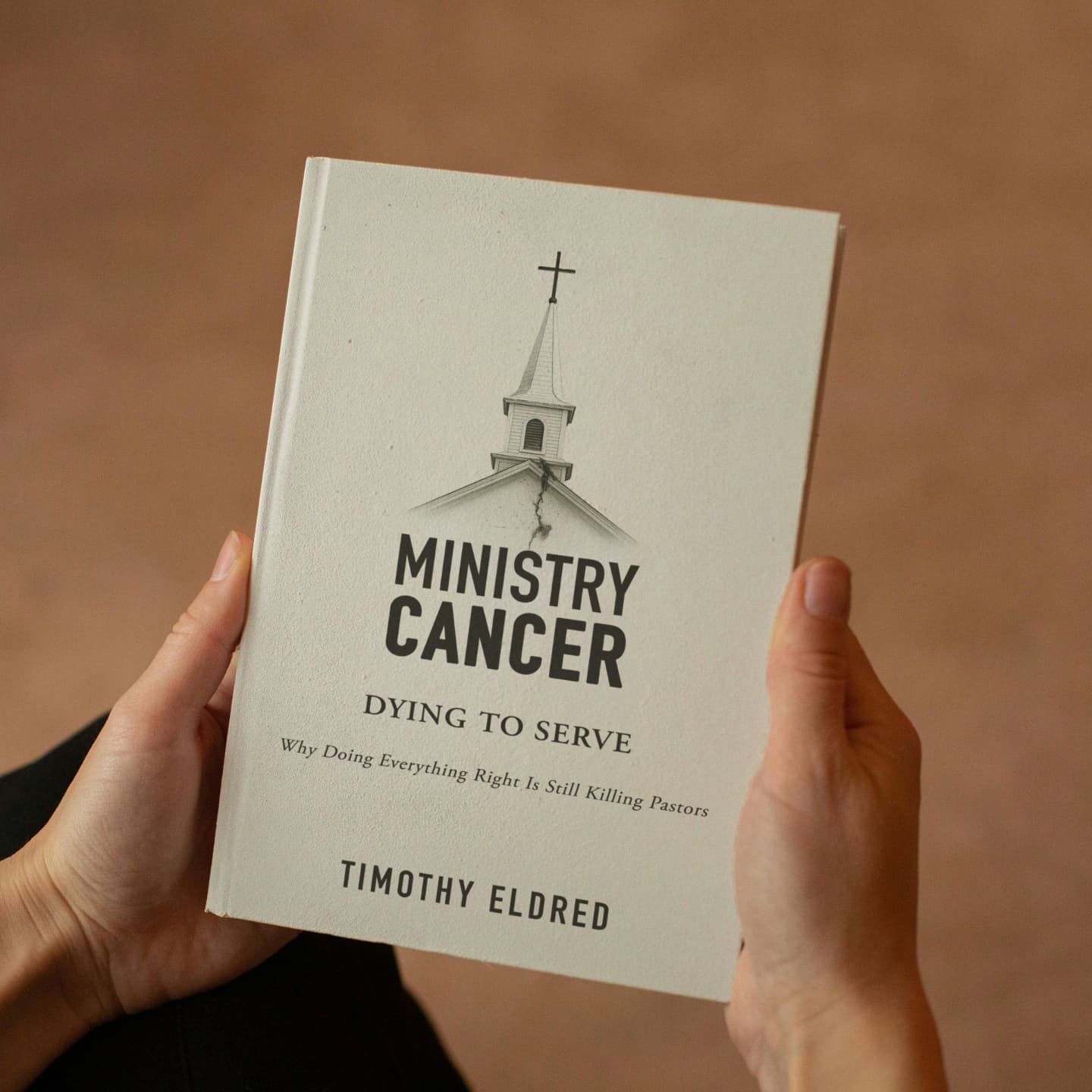
Tim Eldred has been serving in pastoral ministry for over three decades and has had the privilege of training and mentoring thousands of pastors in over 40 countries. He is the founder of The Authentic Pastor. Most importantly, he is a husband, father, and grandfather.